

From Idea to Launch: How We Build Digital Products
August 2026 · DNS Progress Team
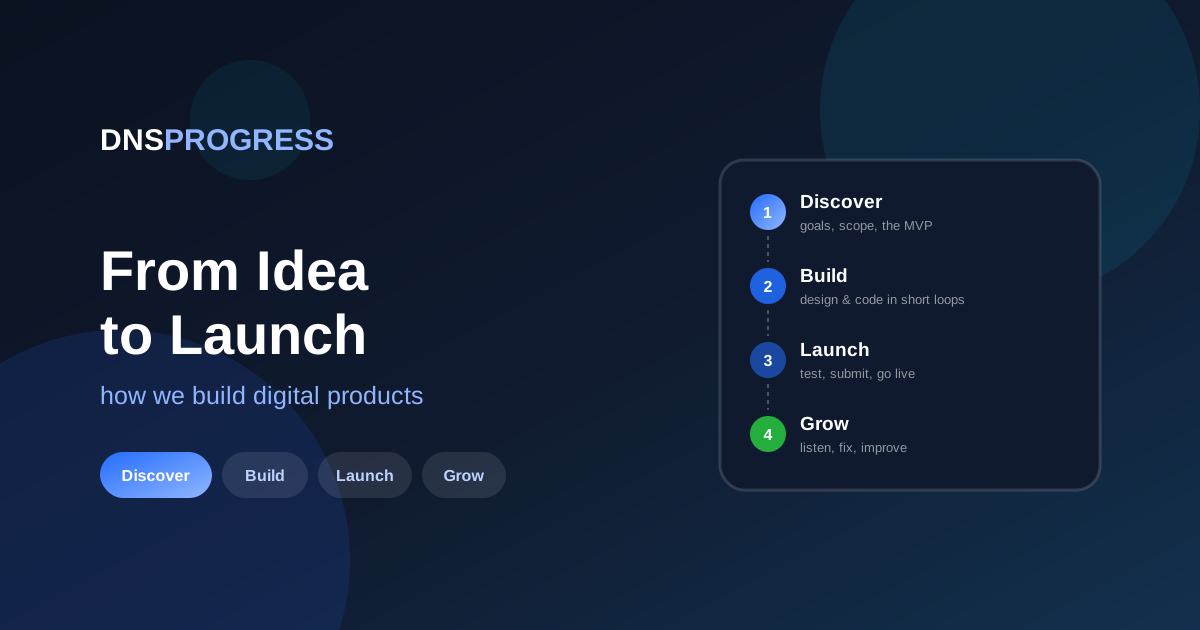
Every product starts the same way: someone has an idea. What separates products that ship from ideas that stay ideas is not talent or luck — it is a repeatable process. This is how we take a digital product from a rough idea to a launch on Google Play.
Start with the problem, not the feature
Before writing a single line of code, we force ourselves to answer hard questions:
- Who is this for? A clear user — not “everyone”.
- What problem does it solve? If the problem is fuzzy, the product will be too.
- Why now? What makes this the right moment to build it?
If you can describe the problem in one sentence, you can build the product in one sprint. If you cannot, no amount of features will fix it.
We write these answers down and keep them visible for the whole project. When a feature does not serve the problem, it gets cut — no matter how shiny it is.
Our process: four short phases
We do not hand off work between departments and hope for the best. Each product moves through four phases, and each phase ends with something you can see and react to.
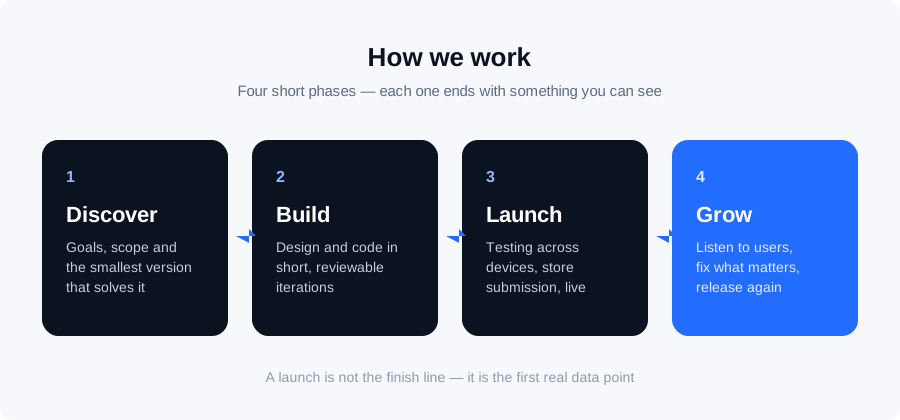
- Discover — goals, scope, and the smallest version that solves the problem (the MVP).
- Build — design and development in short, reviewable iterations.
- Launch — testing across devices, store submission, and going live.
- Grow — listening to users, fixing what matters, and improving.
Design and code in short loops
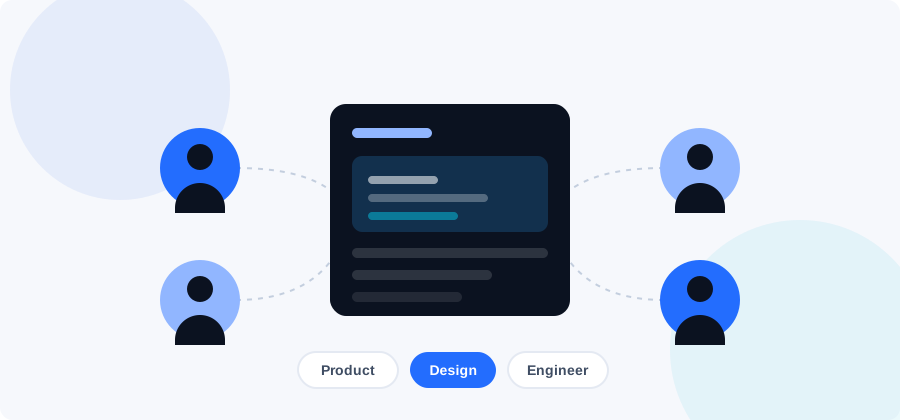
Long phases hide problems. So we work in short loops: design a little, build a little, test a little, show the result. The team reviews everything together — product, design, and engineering — so decisions are made once and made right.
This is also why we choose proven technology (Flutter and React Native for mobile, modern static-first stacks for web). We are not chasing the newest framework; we are choosing tools that ship fast and stay fast.
A small team that stays close to the product
No one on our team is “just a coder” or “just a designer”. Everyone owns the outcome. That keeps communication short, decisions fast, and quality personal.
We also stay close to the product after launch. The most valuable feedback always comes from real users, and the fastest way to improve is to watch them use what we built.
Ship, learn, repeat
A launch is not the finish line — it is the first real data point. After launch we watch retention, read reviews, and talk to users. Then we do it again: learn, improve, release.
- Ship a focused version first.
- Measure how people actually use it.
- Improve what matters, cut what does not.
- Repeat.
This is how our own products on Google Play are built, and how we build for our clients too. If you are thinking about building a product or an app, let’s talk — the first conversation is free.
Related articles
How to Build a Mobile App from Scratch in 2026
A complete step-by-step guide to building a mobile app — from idea to app store launch. Covers planning, design, development, testing, and deployment.
Read article →
React Native vs Flutter in 2026: Which One Should You Choose?
A practical comparison of React Native and Flutter in 2026 — performance, developer experience, ecosystem, and real-world trade-offs to help you pick the right framework.
Read article →Need help building your product?
We build mobile apps, websites, and custom software for businesses. Tell us about your project and get honest advice — free.